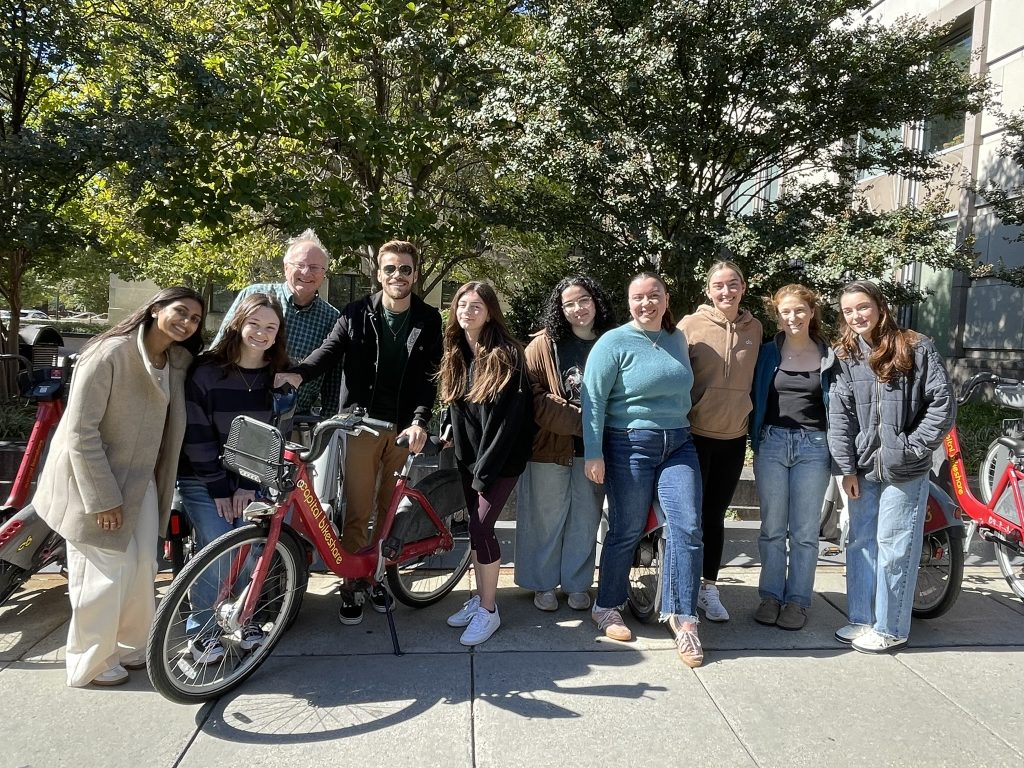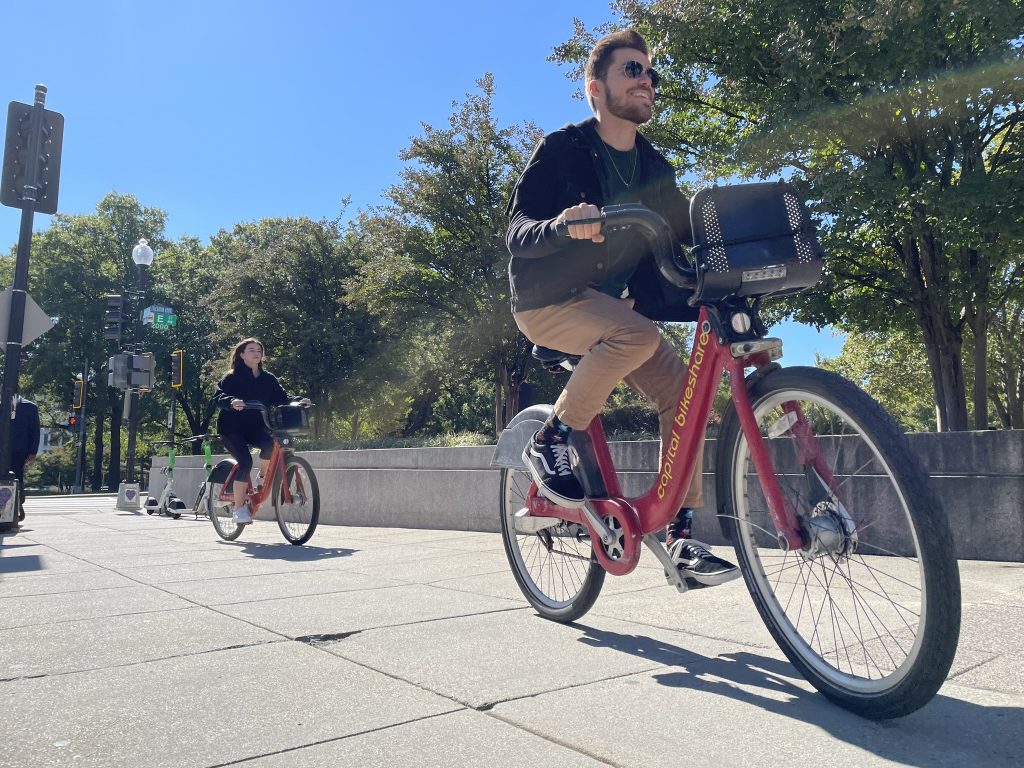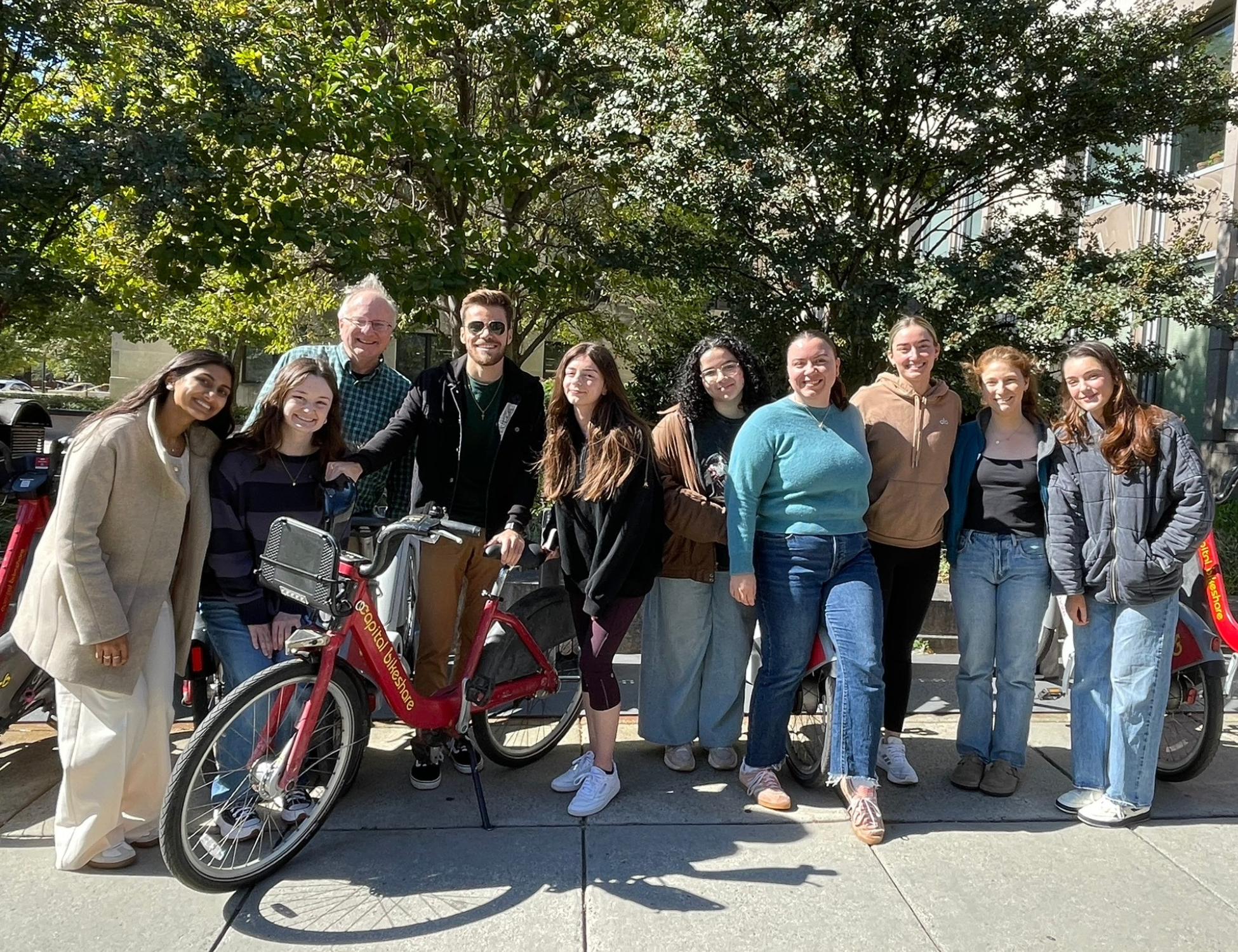
Across George Washington University’s Foggy Bottom campus, Capital Bikeshare stations offer students a convenient way to navigate Washington, D.C. Yet despite their visibility, relatively few members of the university community take advantage of its discounted membership program. For GW Sustainability Fellows Gianna Galdieri and Max Wiener, that gap presented an opportunity to explore a bigger question: What does it take to make eco-friendly transportation an accessible, feasible choice for an entire campus community?
With encouragement from Professor Robert Orttung, director of GW’s Sustainability Research Institute, Galdieri and Wiener pursued the question through a Second Nature Catalyst Grant. Their $2,719 grant supported research concerning student commuting patterns, barriers to biking, and opportunities to strengthen GW’s partnership with Capital Bikeshare (CaBi).
The findings showed that the challenge spanned beyond providing bicycles. As of 2023, just 828 of approximately 31,000 eligible GW students, faculty, and staff participated in the discounted membership program, only 2.7% of the eligible population.
To understand why, the fellows conducted focus groups and interviews with undergraduate students, including regular cyclists, occasional bikeshare users, and students who rarely or never biked. Rather than assuming what would encourage participation, they asked students directly about their experiences.
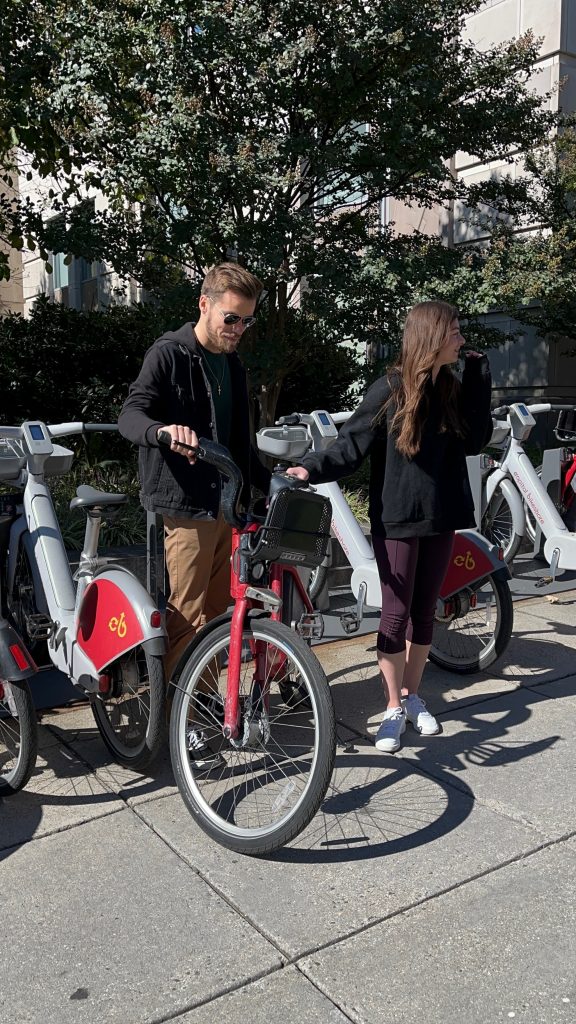
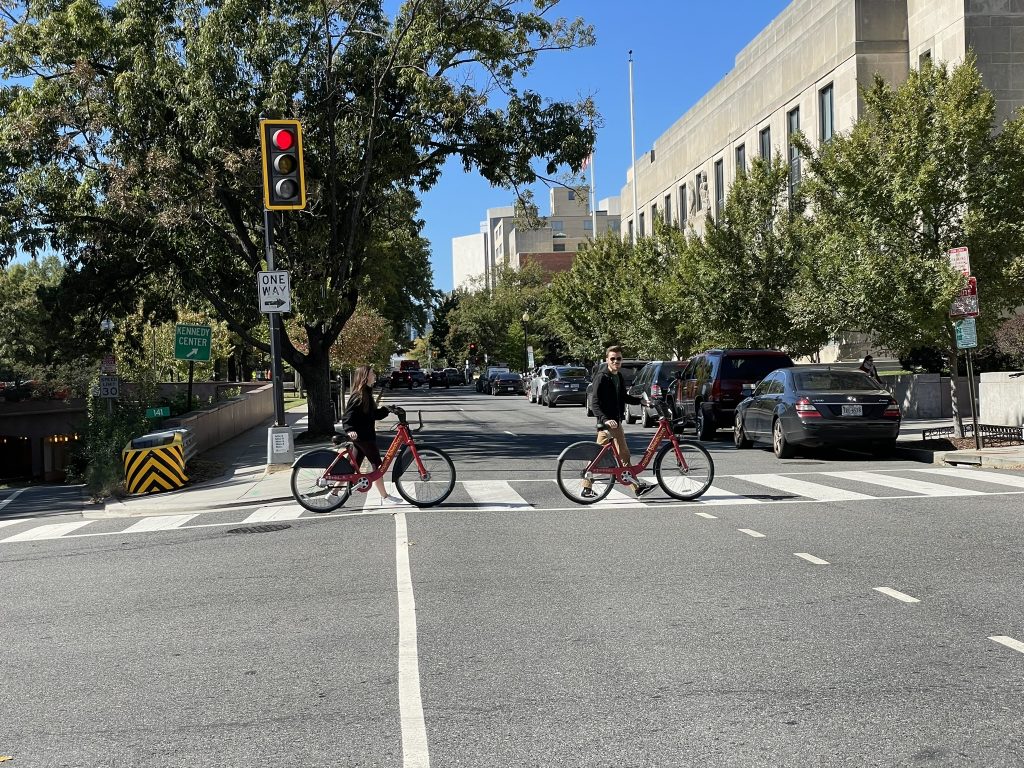
The research uncovered three interconnected barriers: awareness, safety, and accessibility.
Many students were unaware that GW offered a discounted Capital Bikeshare membership. Others struggled to manage the enrollment process, while some who knew about the program remained hesitant to ride.
Safety emerged as a key concern. Students described feeling comfortable in designated bike lanes but uncertain when those lanes disappeared or when they had to navigate congested streets. One student explained, “I feel safe in the bike lanes since there are designated areas for the bikes, but when it’s on the road, I don’t know where to go with that.”
The research also identified practical design challenges, including inadequate baskets, missing phone holders, uncomfortable seats, and limited lighting. These ostensibly minor inconveniences could make an otherwise affordable transportation option less appealing.
Importantly, the findings suggested that interest was not the main obstacle. Approximately half of interviewed students unfamiliar with GW’s discounted membership expressed interest after learning about its price and benefits. Many students had also used Capital Bikeshare recreationally without purchasing a membership.
The observations informed recommendations to make biking easier to discover, access, and use. Proposed strategies included integrating the discounted membership with GW’s existing UPass program, incorporating biking information into student orientation, expanding campus outreach, improving station availability, and championing safer infrastructure and more accessible bike designs.
The fellows also translated research into action. They partnered with GW’s Biking Club, hosted safety workshops, distributed safety merchandise, developed a comprehensive biking resource guide, and offered students discounted memberships. Their work helped bring transportation sustainability into conversations and activities across campus.
For GW, the project supports its goal of carbon neutrality by 2030 while advancing affordable, equitable transportation options. For other higher education institutions, its lessons extend beyond bikeshare: understanding why people do not participate can be just as important as investing in sustainable infrastructure.
By listening to students and addressing the barriers they identified, GW demonstrates how campus research, community partnerships, and practical interventions can make climate-friendly choices easier and inform increasingly inclusive transportation strategies across higher education.